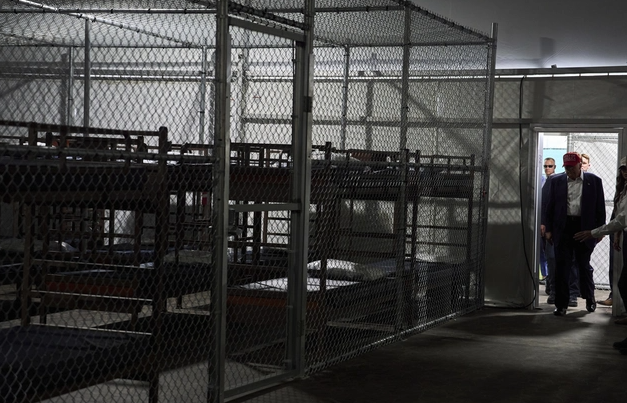
Heavy Caseloads, Regrets, and Surprises: Five Judges Reflecting the Courts’ Pushback Against Trump’s ICE Detention Policy
 By Young Oscar
 Hundreds of federal judges have pushed back against the Trump administration’s expanded use of ICE detentions, resulting in roughly 10,800 adverse rulings as of May 15.
According to POLITICO’s database of decisions and its tracking of judges who have weighed in on the issue, a small number of courts have played a particularly influential role in shaping this widespread judicial response to a key Trump-era immigration policy. These rulings come from judges appointed by presidents across the political spectrum, including Trump appointees, and span districts throughout the country.
One of the most frequently cited judges is Clay Land, a George W. Bush appointee based in Columbus, Georgia. Since ICE introduced a policy last summer allowing for the immediate detention without bond of millions of people who have lived in the U.S. without incident for years, Land has ruled against the government more than 370 times—more than any other judge tracked.
In many of his decisions, Land has favored remedies requiring bond hearings for individuals he determined were detained without proper due process.
While most immigration detainees are held in Texas, California, and Florida, a significant number of cases have emerged in Georgia’s Middle District. The Western District of Michigan has also been especially active, with four judges collectively rejecting ICE’s mandatory detention approach in more than 650 cases, according to POLITICO. These include Hala Jarbou (a Trump appointee), Robert Jonker (George W. Bush appointee), Paul Maloney (George W. Bush appointee), and Jane Beckering (appointed by President Joe Biden).
Overall, four of the ten judges who have most frequently ruled against the administration on mandatory detention were appointed by President Donald Trump, including Jason Pulliam in San Antonio, William Stickman IV in Pittsburgh, Stephanie L. Haines in Jonestown, Pennsylvania, and Judge Jarbou.